
Featured Story
What Ricky Taught Us About Growth, Pride, and Possibility
A life does not need to be loud to change how people see the world. Sometimes it changes everything through quiet dignity, steady effort, and the refusal to live inside someone else’s limits.
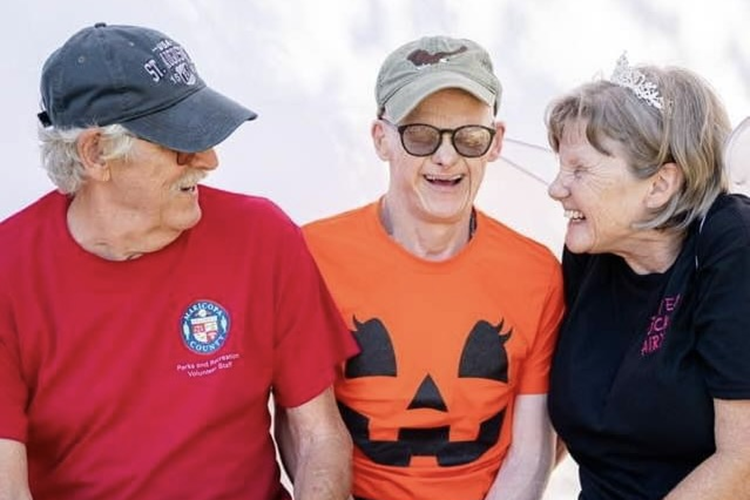
There are some lives that quietly reshape the way we understand the world, not through grand declarations or dramatic moments, but through everyday actions, small decisions, and a perspective that challenges what we assume to be true. Ricky’s life was one of those.
To many, he may initially have been defined by what made him different. Born with Down syndrome, his path was never expected to mirror that of others. Over time, however, it became clear that it was not Ricky who needed to change, but the expectations placed around him. He did not live within those limits. He grew, he learned, and he took pride in what he accomplished, ultimately showing those around him what is possible when a person is seen for who they truly are.
Growth Happens in Moments, Not Milestones
Growth is often measured through visible achievements such as titles, awards, or public recognition. Yet Ricky’s life illustrates that growth is more accurately revealed through moments, moments that may appear small to others, but carry lasting significance.
As a member of a Special Needs Boy Scout troop, Ricky participated fully in the structured progression of badges and ranks. He learned skills, completed tasks, and advanced step by step through a process that demanded persistence and effort. His journey was neither rushed nor simplified, but it was distinctly his own. Over time, these consistent efforts led him to achieve the rank of Eagle Scout, an accomplishment that, in itself, would have been remarkable.
What further distinguished this moment was the recognition that followed. Ricky received letters of acknowledgment from individuals in positions of influence, including members of Congress and even the President. To him, these letters were not merely formal gestures; they held genuine meaning. They affirmed that his efforts were seen and valued, and he accepted that recognition with sincerity and pride.
Pride Is Not Given; It Is Earned
The day of Ricky’s Eagle Scout ceremony was carefully planned and eagerly anticipated. The event was to take place at his parish church, surrounded by individuals who had witnessed his growth and were present to celebrate his achievement. However, just before the ceremony was to begin, Ricky was unexpectedly absent.
After a brief but anxious search, he was found standing outside, quietly looking up at the sky. When asked what he was doing, he responded without hesitation that he was waiting for Air Force One because he had received a card from President Bill Clinton. His statement was neither ironic nor confused; rather, it reflected his own interpretation of recognition and possibility.
When it was gently explained to him that the President would not be arriving, Ricky accepted this reality. However, he immediately suggested that a video of the ceremony could be sent so that the President could see what he had missed. This response revealed something far more significant than a misunderstanding. It demonstrated a genuine belief that his accomplishment was meaningful and worth sharing.
“Can we send him the video Jeff is making so he can see what he missed?”
This moment illustrates a form of pride that is not externally assigned, but internally developed. It is the result of effort, experience, and an understanding of one’s own achievements. Ricky’s pride was grounded not in expectation, but in the value he placed on what he had earned.
Learning Does Not Always Follow a Defined Path
There is a common assumption that learning occurs through direct instruction, correction, and repetition. While these methods are effective in many contexts, Ricky’s experiences suggest that learning can also emerge through observation and personal interpretation.
When an opportunity arose for Ricky to interview for a position at a neighborhood grocery store, preparations were made to help him succeed. Conversations took place, expectations were discussed, and clothing was selected in advance. However, on the morning of the interview, Ricky chose to present himself differently. He appeared wearing a blue suit, rather than the outfit that had been prepared.
When it was suggested that such formality might not be necessary, Ricky responded with a simple and direct explanation: that a suit was appropriate for a job interview. This decision reflected his own understanding of how to approach an important occasion. He had internalized the idea that certain moments require a certain level of respect and presentation.
Ricky’s approach proved effective. He secured the position and went on to become one of the store’s most popular employees. His success was not the result of lowered expectations or sympathy, but rather a reflection of his consistent effort, positive attitude, and genuine engagement with others. In this instance, Ricky demonstrated not only the ability to learn, but also the ability to apply that learning in a meaningful way.
Possibility Expands When It Is Allowed to Exist
One of the most significant limitations people impose, often unintentionally, is the assumption of what others are capable of achieving. By defining these limits in advance, opportunities for growth and success can be unnecessarily restricted.
Ricky’s life consistently challenged such assumptions. His participation in youth theater serves as a clear example. Taking on a lead role required him to learn lines, practice movements, and develop the confidence necessary to perform in front of an audience. Performance involves more than memorization; it demands presence, focus, and the willingness to be seen.
Ricky embraced this opportunity fully. Through preparation and persistence, he delivered a performance that earned him the Arizoni Award. During his acceptance speech, the audience responded with a standing ovation, not out of obligation, but out of genuine recognition of his accomplishment. This moment reflects the reality that when individuals are given the opportunity to engage fully, they are often capable of far more than initially expected.
Impact Is Not Defined by Limitations
As Ricky matured, his influence extended beyond his personal achievements. He began speaking at high schools, addressing the impact of using derogatory language, specifically the “R” word. His willingness to speak on this subject demonstrates a deep understanding of the power of language and its effect on others.
Rather than focusing on his own accomplishments, Ricky used his voice to encourage awareness and change. He stood before audiences and asked them to reconsider how they spoke and how their words affected those around them. This form of advocacy is rooted in lived experience and reflects a commitment to improving the understanding of others.
Ricky’s efforts in this area highlight an important truth: impact is not determined by limitations, but by the willingness to engage, communicate, and influence others in meaningful ways.
What Ricky Really Taught Us
It would be possible to summarize Ricky’s life through a list of accomplishments, including his attainment of Eagle Scout, his employment, his recognition in the arts, and his public speaking. However, such a summary would overlook the deeper lessons his life provides.
Ricky demonstrated that growth does not need to follow a predetermined path, and that progress can take many forms. He showed that pride is not something that is given externally, but something that is developed through effort and personal understanding. He revealed that learning can occur through observation and experience, often in ways that are not immediately recognized. Most importantly, he illustrated that possibility is not confined by limitations, but expands when those limitations are removed.
Above all, Ricky emphasized the importance of being seen, not for what one lacks, but for what one contributes.
Final Reflection
There are lives that change how we measure success and understanding. They do not necessarily make things larger or more dramatic, but instead bring clarity to what truly matters.
Ricky’s life reminds us that growth is real, even when it appears different from what we expect. It demonstrates that pride is meaningful when it is earned, and that possibility is often greater than we assume when it is allowed to exist. Ultimately, his life serves as a reminder that the most meaningful impact one can have is not through extraordinary declarations, but through consistently living in a way that encourages others to reconsider what is possible.
This story draws from Debbie Miller’s memoir Raising Ricky, a deeply personal account of lifelong caregiving, Down syndrome, family devotion, and advocacy.
Read Debbie Miller’s full story on Amazon in paperback or eBook.
Available in paperback and eBook.