
Featured Story
The Call That Reminded Me: The Fight Never Ends
The caller ID said Humana, so I answered, assuming it was my brother’s case manager.
We had just completed our in-home meeting. His care plan had been reviewed. The paperwork was signed. Everything was in place. So when I picked up the phone, I expected a routine follow-up.
Instead, I heard a voice I did not recognize.
“Miss Miller, this is Robert from Humana. I’m the supervisor of the Long-Term Care coverage department. I wanted to discuss your brother’s care with you.”
A quiet warning settled in.
“Why?” I asked. “His care plan was already reviewed and approved.”
There was a pause.
“Well, yes,” he said carefully. “But I’d like to discuss the possibility of a less restrictive environment, such as assisted living. His care is our utmost priority.”
I took a breath.
Over the years, I’ve learned that when anger rises quickly, it is best not to let it speak first. So I chose my words deliberately.
“Before we discuss alternatives,” I said, “I want to be clear about a few things.”
And then I explained.
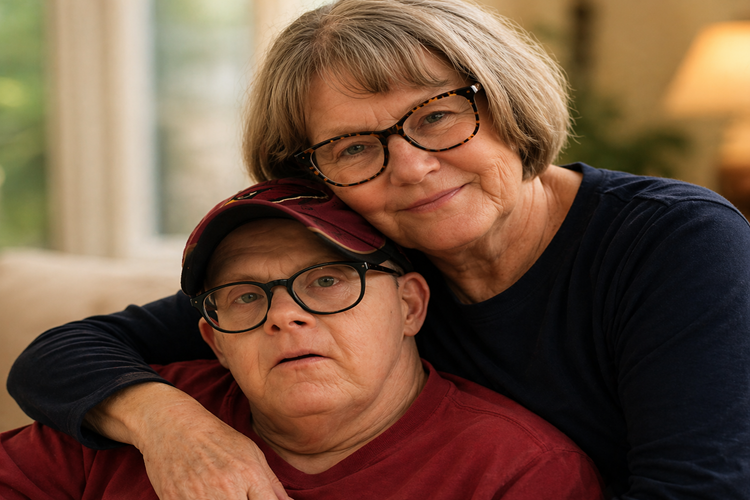
My brother has Down syndrome and Alzheimer’s disease. While he may appear socially engaged, he is fully dependent on skilled nursing staff for medications and daily care. His condition is progressive. It will not improve.
That is not my opinion. It is documented.
He has been approved for long-term care. He has lived safely in his current facility for two years. His plan was reviewed and renewed by their own case manager and by me.
I paused.
“You mentioned a ‘less restrictive environment,’” I continued. “I would like you to explain how removing skilled nursing care, dementia-trained staff, and continuous supervision meets his needs if his needs are truly your priority.”
There was silence on the line.
Then I said what needed to be said.
“Assisted living is not less restrictive for someone who cannot advocate for himself. It is less expensive. Those are not the same thing.”
Another pause.
“My brother is safe. He is stable. He is protected. And he is happy. Any discussion that places cost ahead of his safety is not one I am willing to have.”
The conversation ended quickly after that.
But what stayed with me was not what was said. It was what it represented.
A System That Requires Constant Defense
For many families, moments like this are not rare. They are part of an ongoing reality.
Care plans are not permanent. Approval is not guaranteed. Even after years of stability, there is always the possibility of reassessment of someone, somewhere, deciding that “less” might be enough.
Less care. Less support. Less cost.
But when you are caring for someone who cannot advocate for himself, “less” is not a neutral decision. It has consequences.
What “Less” Really Means
In conversations like these, language matters.
“Less restrictive.” “Alternative placement.” “Cost-effective care.”
These terms sound reasonable until you understand what they mean in practice.
For my brother, removing skilled nursing care would mean removing the very support that keeps him safe. It would mean fewer trained eyes monitoring his condition. Fewer safeguards. Fewer people who understand the complexity of his needs.
It would mean risk.
And risk is not something I am willing to accept on his behalf.
The Weight Carried by Families
Families like mine carry a responsibility that does not end.
We navigate systems. We learn the language. We ask the questions that must be asked. And sometimes, we say the things others hesitate to say.
Because if we don’t, who will?
Advocacy is not just about love. It is about vigilance. It is about standing firm when decisions are being made that affect someone who cannot speak for himself in that moment.
The Moment of Realization
After I hung up the phone, I sat there for a long time.
I had believed perhaps hoped that we had reached a point of stability. That the hardest part was behind us.
But that call reminded me of something I had not fully accepted.
The fight does not end.
There will always be another review. Another evaluation. Another conversation where someone questions what level of care is “necessary.”
And each time, someone has to answer.
Why This Matters Beyond One Family
This is not just my story.
Across the country, families are having similar conversations quietly, persistently, often behind closed doors.
They are advocating for parents, siblings, children, and loved ones who rely on systems of care that can shift without warning.
And each time, the same question is asked in different ways:
What is enough?
For families like mine, the answer is simple.
Enough means safety. Enough means dignity. Enough means care that meets the reality of a person’s needs not the convenience of a system.
A Commitment That Does Not End
I have spent my life advocating for my brother.
That role has changed over time from helping him navigate school, to supporting him in adulthood, to now protecting him through illness and decline.
But the responsibility remains the same.
To stand between him and decisions that do not fully account for his needs. To make sure his life is not reduced to a line item or a cost-saving measure. To ensure that he is seen not just managed.
The Promise I Continue to Keep
That phone call did not change his care.
But it reinforced something important.
Advocacy is not a moment. It is not something you complete. It is something you carry.
And it is something you return to again and again whenever it is needed.
Because for those who cannot stand up for themselves, someone must.
And I will.
Every time.
You just read what it takes to protect someone who cannot protect himself.
Now imagine living it every day.
That’s Raising Ricky.
Not just a story… a life.
“A candid and heartfelt memoir that kept me turning the pages.”
“Beautifully transparent, heart-wrenching, and powerful.”
“An inspiring story of love, resilience, and lifelong commitment.”
“Raw and honest ... a lifelong advocate sharing the burden and blessing of responsibility.”
“I will never give up fighting for my brother.”
Debbie’s story reaches beyond memoir. As a retired nurse, lifelong caregiver, and active advocate, she continues to speak up for her brother and for others with Down syndrome, especially around inequities in access to Alzheimer’s treatments and long-term care.
Read Debbie’s full story on Amazon in paperback or eBook.
Available in paperback and eBook.